

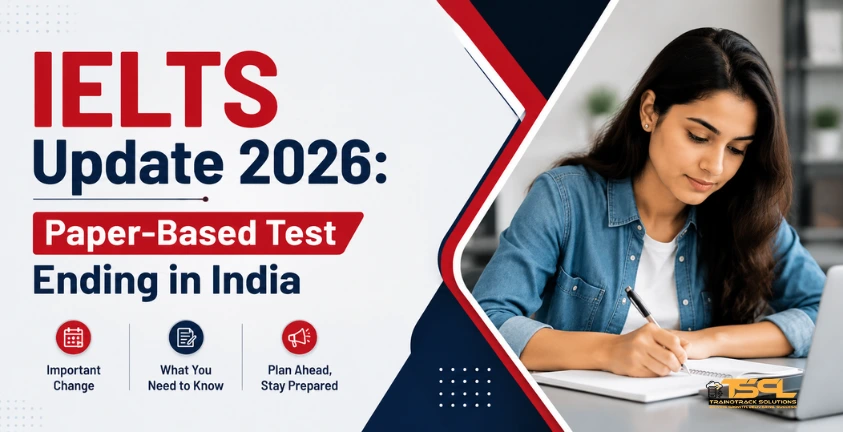
The IELTS exam has long been one of the most trusted English language proficiency tests for students, professionals, and immigrants planning to study, work, or settle abroad. Every year, thousands of Indian candidates choose IELTS Academic and IELTS General Training to fulfill language requirements for countries such as Canada, Australia, the United Kingdom, New Zealand, and many others. As technology continues to transform the education sector, official test administrators are also taking a significant step toward a fully digital testing experience.
One of the biggest announcements from IDP Education for 2026 is that the paper-based IELTS test will no longer be available in India. Beginning in September 2026—with August 22, 2026, scheduled as the final paper-based test date—candidates will take IELTS on a computer at authorized test centers across the country. This transition aims to provide a faster, more efficient, and more modern testing experience while maintaining the same globally recognized scoring system and exam standards, managed in partnership with Cambridge English.
Why Is IELTS Ending the Paper-Based Test in India?
The decision by IDP India to discontinue paper-based IELTS testing reflects the growing demand for digital assessments. Computer-based exams allow testing organizations to manage registrations more efficiently, provide greater flexibility in scheduling, and deliver results much faster than traditional paper exams. As more candidates become comfortable using computers in their daily lives, moving to a digital format has become a natural progression.
This change is not intended to make the exam more difficult or alter the way English language skills are evaluated. Instead, it focuses on improving the overall testing experience. Candidates will continue to be assessed on the same four language skills—listening, reading, writing, and speaking. The questions, difficulty level, scoring criteria, and band descriptors remain unchanged, ensuring fairness and consistency for every test taker.
What Will Change for IELTS Candidates in 2026?
The most noticeable difference for candidates is the method of completing the test. Instead of writing answers with a pen and paper, test takers will use a computer interface featuring noise-canceling headphones for the listening section and an on-screen timer for the reading and writing sections. The speaking test will continue to be conducted face-to-face with a certified IELTS examiner, preserving the personal interaction that has always been an important part of the assessment.
Candidates can also expect a smoother testing process, from registration to receiving their results. IELTS on Computer generally offers more test dates throughout the month and significantly faster result processing. This is especially beneficial for students working with university application deadlines or professionals applying for visas and employment opportunities where timely score reporting is essential.
Additionally, candidates will get access to IELTS One-Skill Retake, a major feature that allows candidates to retake just a single module (listening, reading, writing, or speaking) if they need to boost one specific band score without re-sitting the entire exam.
What Remains the Same Despite the New Format?
Although the delivery method is changing, the core structure of the IELTS exam remains the same. The test will continue to evaluate listening, reading, writing, and speaking skills using the internationally recognized band score system ranging from 0 to 9. Universities, employers, immigration authorities, and professional organizations worldwide will continue accepting IELTS scores without any distinction between computer-delivered and previous paper-based tests.
Candidates should also remember that the exam duration, question types, marking standards, and assessment criteria remain unchanged. Whether a candidate takes the test on a computer or previously completed it on paper, the certificate carries the same value and global recognition. This means preparation strategies largely remain the same, although practicing on a computer has become increasingly important for achieving the best possible performance.
IELTS Before and After the 2026 Update
| Feature | Before September 2026 | From September 2026 |
|---|---|---|
| Test Format | Paper-Based and Computer-Based | Computer-Based Only (India) |
| Writing Method | Pen and Paper or Computer | Computer |
| Speaking Test | Face-to-Face Examiner | Face-to-Face Examiner |
| Listening, Reading & Writing | Paper or Computer | Computer |
| Result Delivery | Paper: Several Days, Computer: Faster | Usually Within 1–2 Days |
| Band Score | 0–9 | 0–9 |
| Global Acceptance | Yes | Yes |
The table clearly shows that while the testing format is evolving, the credibility and recognition of IELTS remain the same. The transition primarily improves convenience without changing the value of the qualification.
How Should Candidates Prepare for the Computer-Based IELTS?
Candidates preparing for IELTS in 2026 should focus not only on improving their English language skills but also on becoming comfortable with the computer interface used during the examination. Developing a comfortable typing speed can make a noticeable difference in the writing section, where efficient time management is essential. Similarly, practicing reading passages on a screen helps candidates become familiar with scrolling, highlighting text digitally, and navigating between questions effectively.
Taking official computer-based mock tests provided by IDP Education and British Council / Cambridge resources is another excellent way to build confidence before exam day. These practice sessions allow candidates to experience the actual testing environment while identifying areas that need improvement. Since the Speaking section remains unchanged, candidates should continue practicing real conversations with teachers or language partners to strengthen fluency, pronunciation, and confidence.
Final Thoughts
The IELTS 2026 update represents an important milestone in the evolution of one of the world's most respected English language proficiency examinations. While the end of paper-based testing in India may initially seem like a significant adjustment, the transition ultimately offers several advantages, including quicker results, greater scheduling flexibility, IELTS One-Skill Retake access, and a more streamlined testing experience.
For candidates, the most important takeaway is that the exam's purpose, scoring system, and international recognition remain the same. Success in IELTS will continue to depend on strong English language skills, effective preparation, and familiarity with the exam format. By embracing computer-based practice and understanding the updated testing process, candidates can confidently prepare for the test. To move one step closer to your academic, professional, or immigration goals, you can book your IELTS exam slots hassle-free through Trainotrack Solutions.


















Leave a Comment